Fresh rosemary has a warm, fragrant taste that blends smoothly with soft butter, giving these cookies a calm but memorable flavor. I learned to make this recipe while testing different butter and sugar combinations in my own kitchen, and the version that worked best used simple ingredients with one key twist. The texture feels light and tender because the dough uses confectioners’ sugar instead of regular sugar. Another benefit is the slice and bake style of shaping the dough, which makes the process quick and easy to manage. You can chill the dough, slice it when ready, and bake perfect rounds with very little effort.

Table of Contents
The Secret to a Perfect, Melt in Your Mouth Crumb
Why Confectioners’ Sugar Is Key
Confectioners’ sugar blends smoothly into the butter and creates a soft, fine crumb. Its tiny particles melt fast in the oven, which gives the cookies a tender bite. Granulated sugar does not break down the same way and leads to a firmer cookie, so confectioners’ sugar is the best choice for a soft finish.
The Quality of Butter Matters
Butter carries most of the flavor in shortbread, so the quality of the butter makes a clear difference. A high fat, European style option gives a richer taste and a smoother texture. It also helps the dough set nicely while chilling, which leads to cleaner slices and a more even bake.
Should I Add Rice Flour or Cornstarch
Some bakers use a small amount of rice flour or cornstarch to boost tenderness. Each one softens the dough by reducing gluten development. Rice flour creates a slightly sandy bite while cornstarch keeps the texture extra delicate. These additions are optional, but they can help you shape the cookie exactly the way you like it.
Essential Ingredients You Will Need
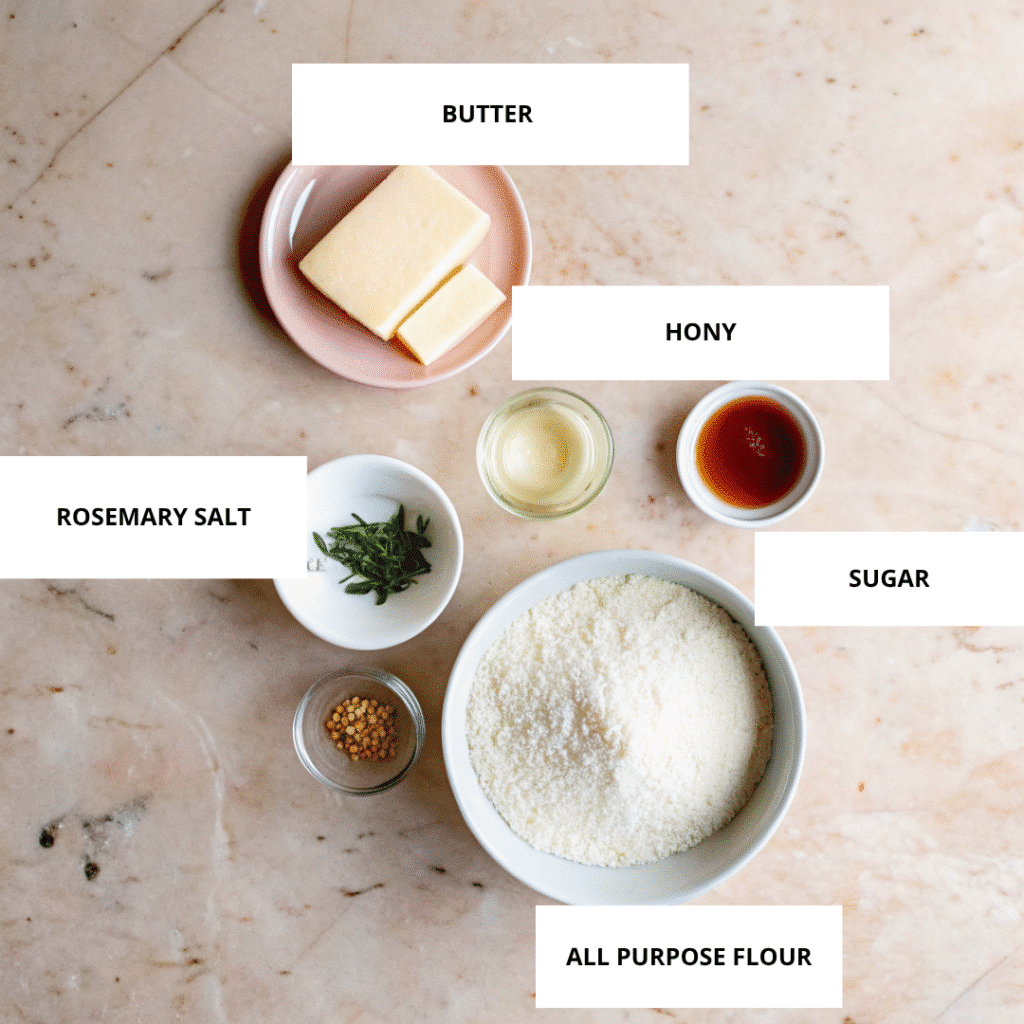
• Butter (softened)
Softened butter mixes smoothly and traps small air pockets during the creaming stage. This helps the cookies stay light and tender.
• Confectioners’ Sugar
This sugar gives the dough a fine, soft texture and creates the melt in your mouth finish.
• Fresh Rosemary
Fresh rosemary brings bright flavor and a pleasant aroma. Dried rosemary stays tough and does not soften well in the dough, so fresh is the best choice.
• All Purpose Flour
This flour forms the base of the dough. A gluten free blend can work if you prefer that option.
• Sea Salt
A small pinch balances the sweetness and brings out the flavor of the butter and rosemary.
Instructions
- Start the Dough with the Creaming Step
Place the softened butter in a bowl and mix it with the confectioners’ sugar. Cream the mixture for five to seven minutes. The texture should look pale and fluffy. This stage helps the cookies stay light. - Combine the Dry Ingredients
In a separate bowl, mix the flour, chopped rosemary, and sea salt. Add this dry mix to the creamed butter mixture. Stir until the dough comes together. It should feel soft but not sticky. - Shape the Dough and Chill Overnight
Place the dough on a sheet of plastic wrap and shape it into a smooth log. Wrap it tight so the shape holds. Put the log in the fridge and let it chill overnight. This step keeps the cookies from spreading too much while baking and helps you cut clean slices. - Slice and Bake
Heat your oven to 350°F. Unwrap the chilled dough and cut it into quarter inch slices. Place the slices on a baking sheet lined with parchment paper. Leave a little space between each cookie. Bake for eleven to thirteen minutes. The cookies are ready when the edges turn light golden.
FAQs
What is the best sugar for shortbread ?
Confectioners’ sugar gives the softest texture. Its fine texture blends smoothly with butter and helps the cookies feel light and tender.
What makes shortbread so crumbly ?
Shortbread has a crumbly feel because it uses a high amount of butter and very little liquid. The small amount of mixing also keeps the dough tender instead of tough.
What happens if you do not chill shortbread before baking ?
If you skip the chilling step, the dough warms too fast in the oven and spreads. Chilled dough holds its shape and bakes evenly.
What are some common shortbread mistakes ?
Some common issues include using warm butter, overmixing the dough, skipping the chill time, and cutting slices that are too thick or too thin. Each one affects texture and shape.
Do shortbread cookies harden as they cool ?
Yes. They feel soft when they come out of the oven, then firm up as they cool. Let them rest on the tray for a few minutes before moving them.
How long can you keep homemade shortbread cookies ?
You can store cooled shortbread in an airtight container for up to five days. The flavor stays fresh and the texture stays crisp during this time.

rosemary shortbread cookies
- Total Time: 24 hours
- Yield: 20 to 24 cookies
- Diet: Vegetarian
Description
Soft, buttery rosemary shortbread cookies with a light crumb and gentle herbal flavor. Easy slice and bake dough that chills overnight for clean cuts and perfect texture.
Ingredients
- Butter (softened)
- Confectioners’ sugar
- Fresh rosemary (finely chopped)
- All purpose flour
- Sea salt
Instructions
- Cream the softened butter with confectioners’ sugar for 5–7 minutes until pale and fluffy.
- Mix the flour, chopped rosemary, and sea salt in a separate bowl.
- Add the dry mixture to the creamed butter and mix until the dough forms.
- Shape the dough into a log, wrap tightly, and chill overnight.
- Preheat oven to 350°F.
- Slice the chilled dough into 1/4-inch pieces and place on a parchment-lined baking sheet.
- Bake for 11–13 minutes, until the edges are lightly golden.
Notes
Chilling the dough overnight ensures clean slices and prevents spreading during baking.
- Prep Time: 10 minutes
- Cook Time: 13 minutes
- Category: Dessert
- Method: Slice and bake
- Cuisine: American
Nutrition
- Serving Size: 1 cookie
- Calories: 259 kcal
- Sugar: 12 g
- Sodium: 122 mg
- Fat: 15 g
- Saturated Fat: 10 g
- Unsaturated Fat: 5 g
- Trans Fat: 1 g
- Carbohydrates: 28 g
- Fiber: 1 g
- Protein: 2 g
- Cholesterol: 40 mg
Flavor and Shaping Variations
Rosemary Citrus Shortbread
Add a teaspoon of lemon zest, orange zest, or grapefruit zest to the dough for a bright, sunny flavor. Mix the zest into the butter and sugar during the creaming stage so the oils spread evenly.
Salted Rosemary Shortbread
Sprinkle a pinch of flaky sea salt on top of each cookie before baking. The light salt adds a sweet and savory balance that pairs well with the herbal notes of rosemary.
Shaping into Shortbread Bars or Fingers
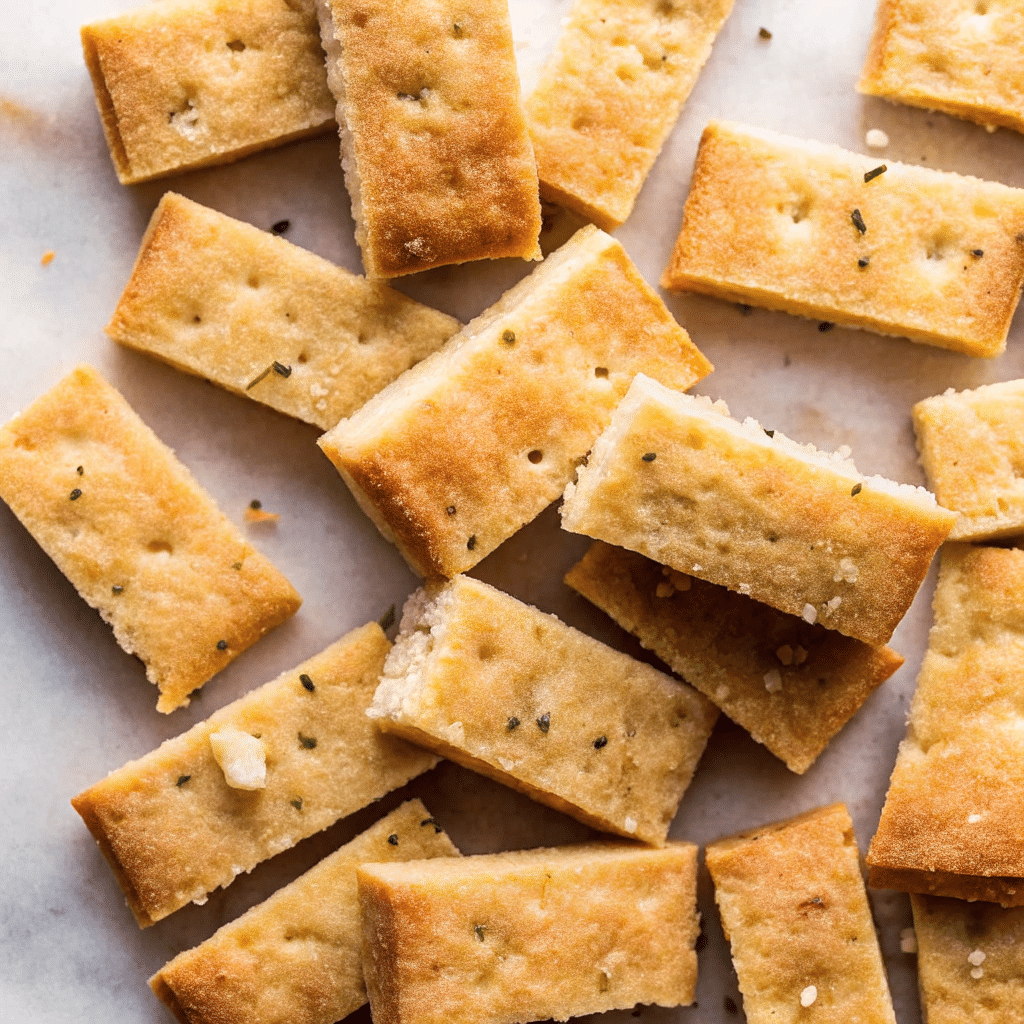
Instead of shaping the dough into a log, press it into a square baking pan lined with parchment. Smooth the top and chill the pan. Once chilled, cut the dough into bars or fingers, then bake until the edges turn golden.
Adding Crunch
For a crisp outer layer, roll the dough log in sanding sugar before chilling. You can also press slivered almonds into the outside of the log for a nutty crunch. Both options give the cookies a pretty finish and a bit of texture.
Beyond Dessert: Savory Pairings for Rosemary Shortbread
Rosemary shortbread has a gentle herbal taste that works well with salty or creamy foods. You can serve these cookies on a cheese board for a simple upgrade to a snack or small gathering.
Try pairing them with soft goat cheese for a smooth and tangy mix. Aged cheddar adds a sharp contrast that balances the buttery base of the cookie. If you want a light drink to go with the flavors, choose a crisp white wine with clean notes that do not overpower the rosemary.
These pairings make the cookies feel special and turn them into a snack that fits both sweet and savory moods.
Storage, Freezing, and Elegant Gifting
H3: How to Store Rosemary Shortbread
Once the cookies cool, place them in an airtight container. They keep their flavor and texture for up to five days. Keep the container in a cool, dry spot to avoid moisture that can soften the cookies.
Can You Freeze the Dough or Baked Cookies
Yes. Wrap the shaped dough log in plastic wrap, then add a second layer of foil to protect it from freezer air. Freeze the dough for up to two months. You can slice it straight from the freezer, but let it rest for a few minutes so the knife moves cleanly.
Baked cookies also freeze well. Once cooled, place them in a freezer safe container with sheets of parchment between each layer. They keep their taste and texture for about one month.
Gifting and Presentation Ideas
For a simple and elegant gift, place the cookies in a clear cellophane bag and tie the top with a soft ribbon. Add a small sprig of fresh rosemary for a natural touch and a light scent. You can also arrange the cookies in a small tin lined with parchment for a neat and classic presentation.
Fore more recipes follow me in Facebook, medium and Pinterest